








Newsletter Subscribe
Enter your email address below and subscribe to our newsletter


A bedroom with marble or tiled flooring can look beautiful, but the floor may feel cold or hard when you step out of bed. Adding a carpet introduces a softer surface, brings texture into the room and helps connect the furniture with the surrounding décor.
Bedroom carpet design is not just about choosing a colour or pattern. The material, pile height, size and placement all influence how a carpet looks, feels and performs over time.
Some bedrooms benefit from a large carpet beneath the bed, while others need only a small bedside rug. From minimalist styles to patterned designs and wall-to-wall carpeting, this guide explores practical options to help you find a suitable match for your bedroom.
Carpets can serve different purposes in a bedroom. A neutral design can complement existing furniture, while a colourful pattern can become a focal point. The following bedroom carpet ideas offer options for modern, traditional, compact and spacious interiors.
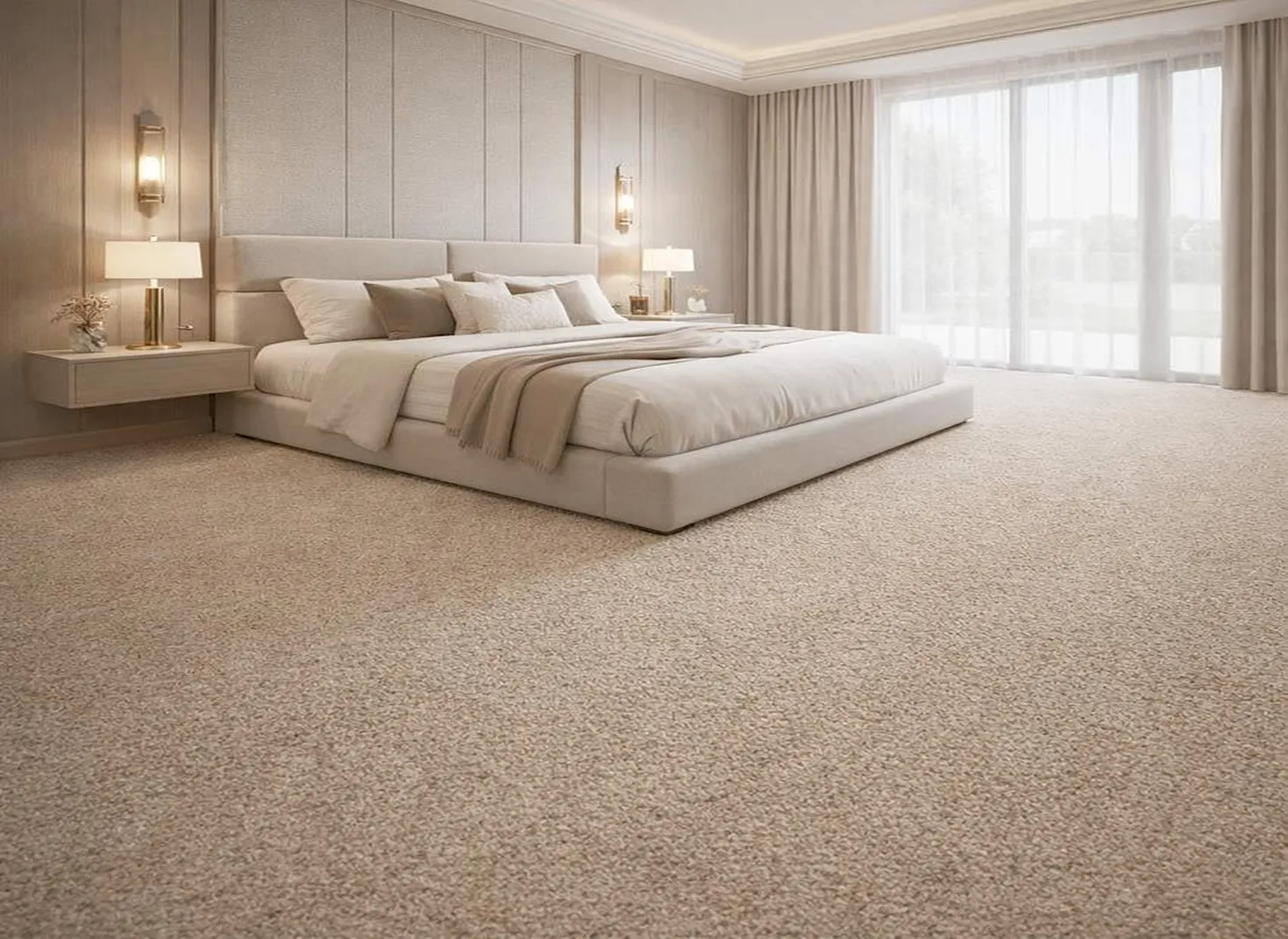
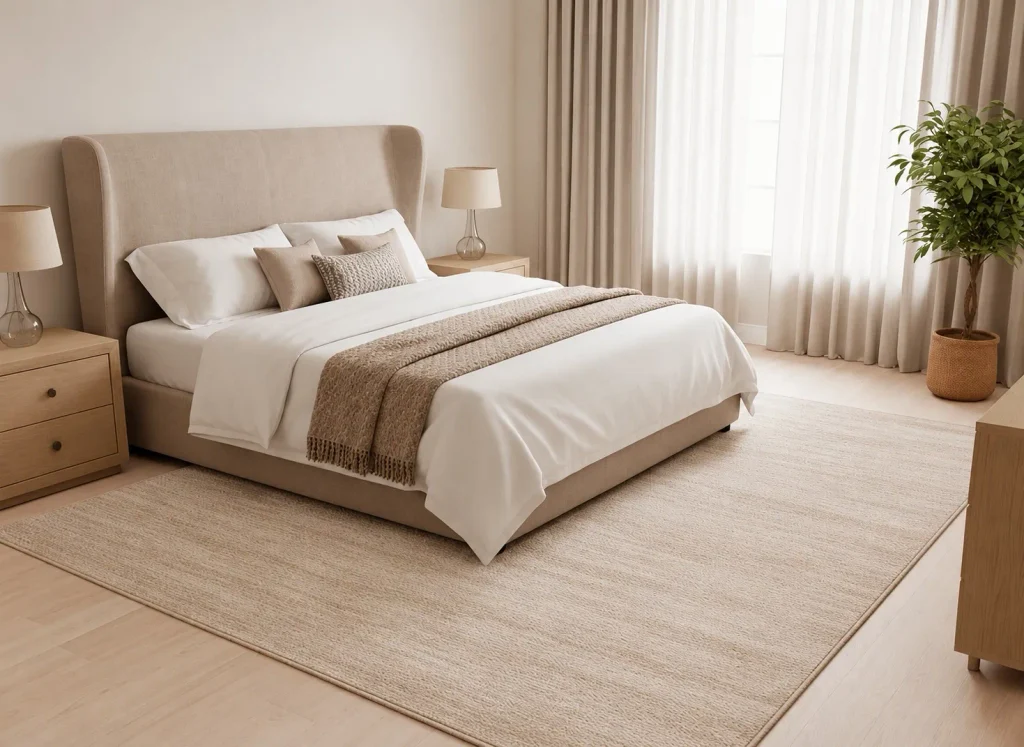
Minimalist bedroom carpets generally feature solid colours, subtle patterns and simple textures. Shades such as cream, beige, ivory, taupe and light grey work particularly well with uncluttered interiors.
A plain rectangular carpet beneath a wooden bed can soften the appearance of a room without competing with the furniture. For a little more visual interest, consider a tone-on-tone pattern or a lightly textured weave.
These designs suit Scandinavian-inspired bedrooms, contemporary homes and interiors with neutral walls.
Styling tip: If your walls, bed and curtains are already similar in colour, select a carpet that is slightly lighter or darker to create gentle contrast.
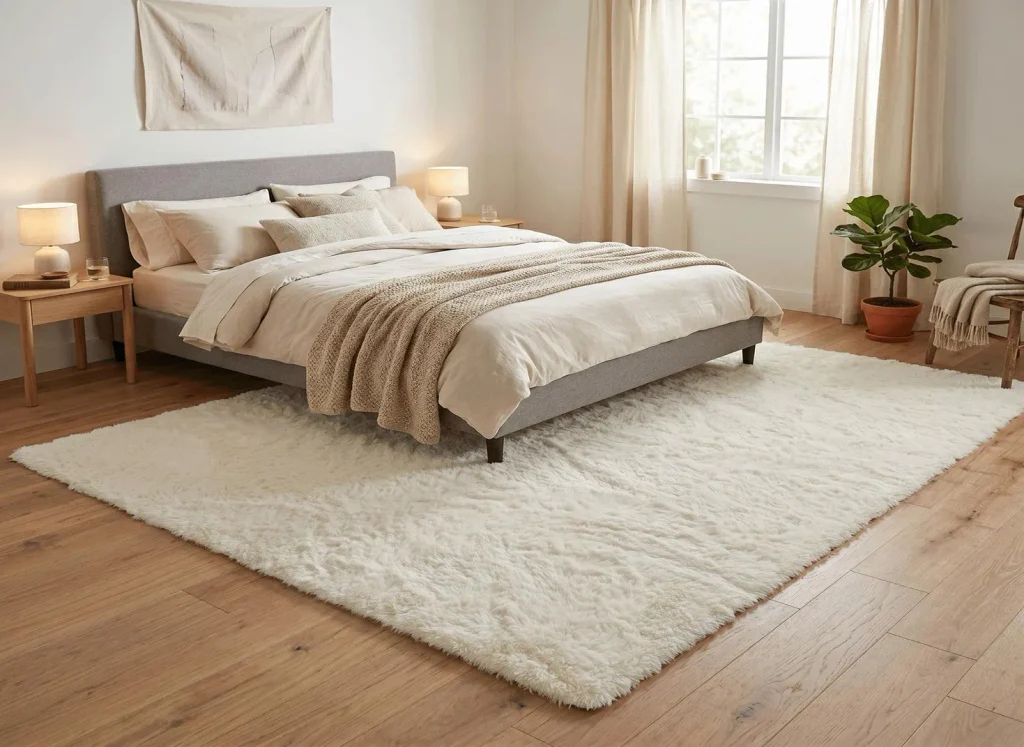
Plush carpets have a dense, soft surface made from closely packed fibres. They are particularly appealing in bedrooms where underfoot comfort is a priority.
If you are looking for a soft carpet for bedroom use, consider a plush cut-pile carpet or a soft medium-pile rug. Both can provide a comfortable surface without necessarily requiring extremely long fibres.
Cream, muted pink, warm grey and beige are useful colours for creating a gentle, inviting look.
However, plush carpets can show footprints, vacuum marks and flattened areas more easily than some textured designs. They also require regular cleaning to maintain their appearance.
Styling tip: Position a soft carpet where you regularly step out of bed rather than placing a small plush rug in an unused corner.
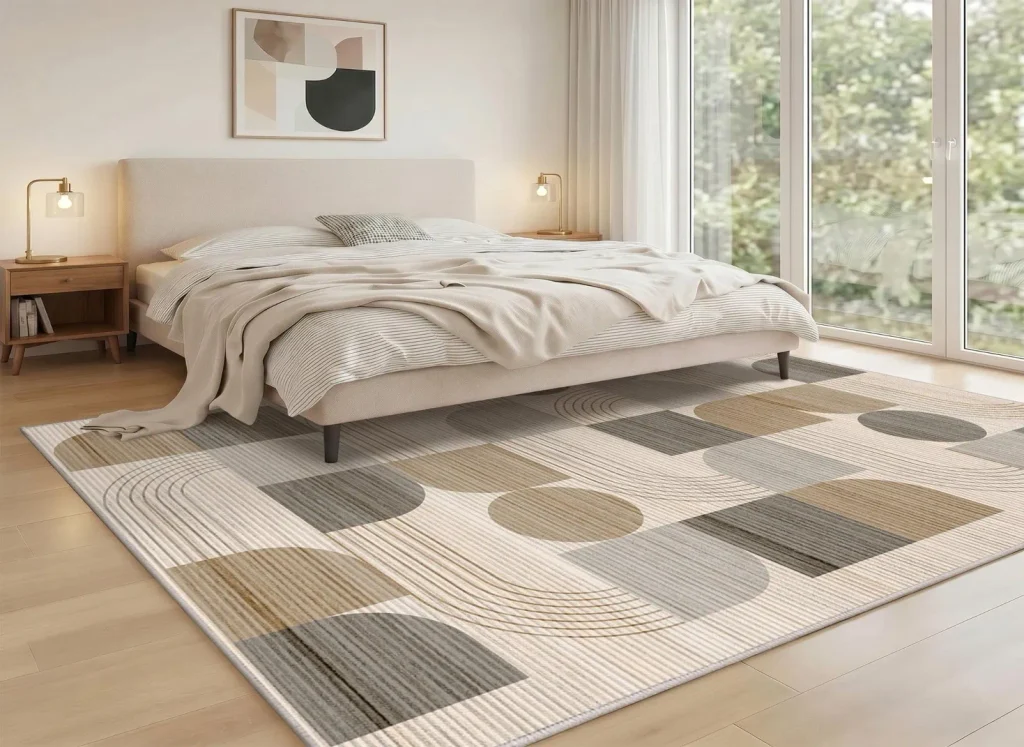
Geometric carpets feature lines, curves, triangles, rectangles or abstract shapes. They introduce structure and visual movement, making them suitable for modern bedroom interiors.
A carpet with thin black lines on a beige background can complement simple wooden furniture. Larger abstract patterns can work in rooms with plain bedding and minimal decorative accessories.
Geometric patterns are also useful when a bedroom feels visually flat. They add detail without requiring additional wall decorations.
The important consideration is balance. If your wallpaper, curtains or bedspread already have prominent patterns, choose a carpet with a simpler design.
Styling tip: Repeat one colour from the carpet in your cushions or curtains to help the pattern feel connected to the room.
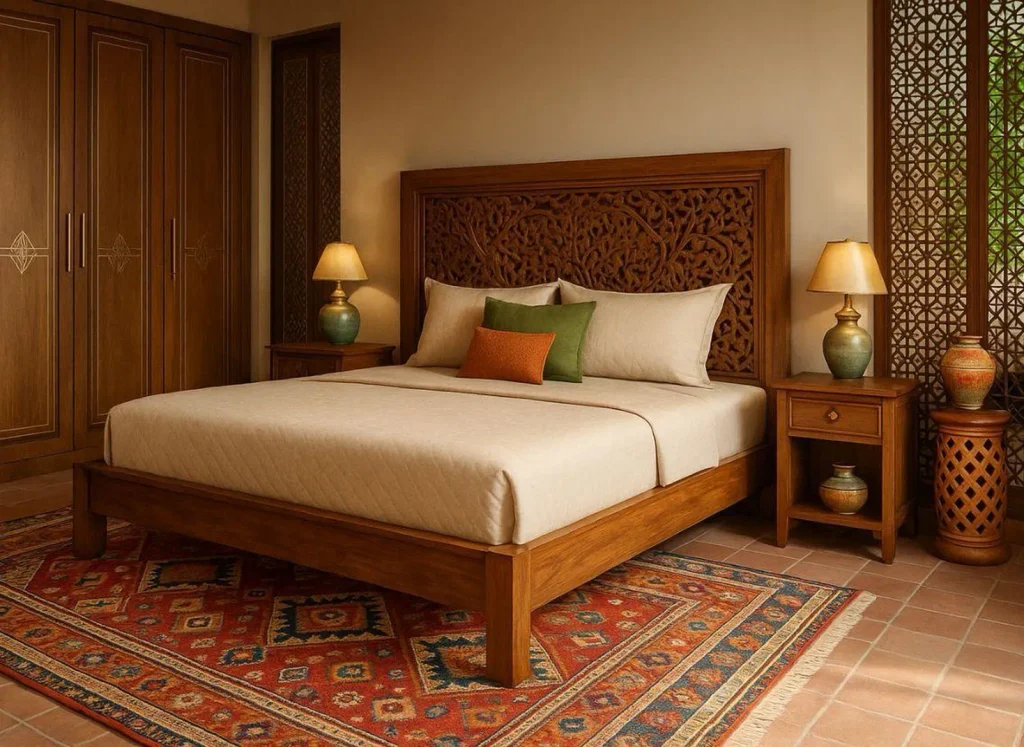
Traditional carpets often feature floral motifs, decorative borders, medallions and detailed repeating patterns.
Persian-inspired designs are particularly suitable for bedrooms with carved wooden beds, antique-style furniture or traditional decorative elements.
Deep red, navy blue, rust, mustard and cream are commonly used in these patterns. A richly patterned carpet can bring warmth and character to a room with otherwise plain flooring.
For a bedroom with dark wooden furniture, consider a carpet that combines warm red or rust tones with cream detailing. If the furniture is already heavily decorated, a less intricate pattern may provide better visual balance.
Styling tip: Before selecting an ornate carpet, check how its colours look alongside the bed upholstery, curtains and existing furniture.
Faux-fur and shag carpets are popular choices for adding noticeable texture to bedroom flooring.
Faux-fur rugs imitate the soft appearance of animal fur using manufactured fibres, while shag carpets feature longer, loosely arranged yarns that create a fluffy surface.
If you are considering a fur carpet for bedroom decoration, a small faux-fur rug beside the bed or near a dressing table can provide the desired effect without covering the entire floor.
White, ivory, blush pink and grey work well in contemporary bedrooms.
The main drawback is maintenance. Longer fibres can trap dust and loose debris, and some styles require special vacuum settings or gentle cleaning methods. The Carpet and Rug Institute notes that certain high-pile carpets can be damaged by unsuitable rotating vacuum brushes.
Styling tip: Use shag or faux-fur rugs in low-traffic areas where they are less likely to become flattened or heavily soiled.
Textured carpets add visual detail through their weave rather than through bright colours or large patterns.
Flatwoven rugs are made without the raised pile found in plush carpets. Their flatter construction makes them suitable for bedrooms where a low-profile floor covering is preferred.
Cotton flatweaves, wool flatweaves and synthetic woven rugs are available in different textures and designs. The cleaning requirements depend on the material and construction.
These rugs complement wooden furniture, earthy colour palettes and relaxed modern interiors.
They can also work well over existing marble or tile flooring, provided a suitable anti-slip underlay is used.
Styling tip: Pair a textured beige or oatmeal-coloured rug with plain bedding and wooden bedside tables for a coordinated appearance.
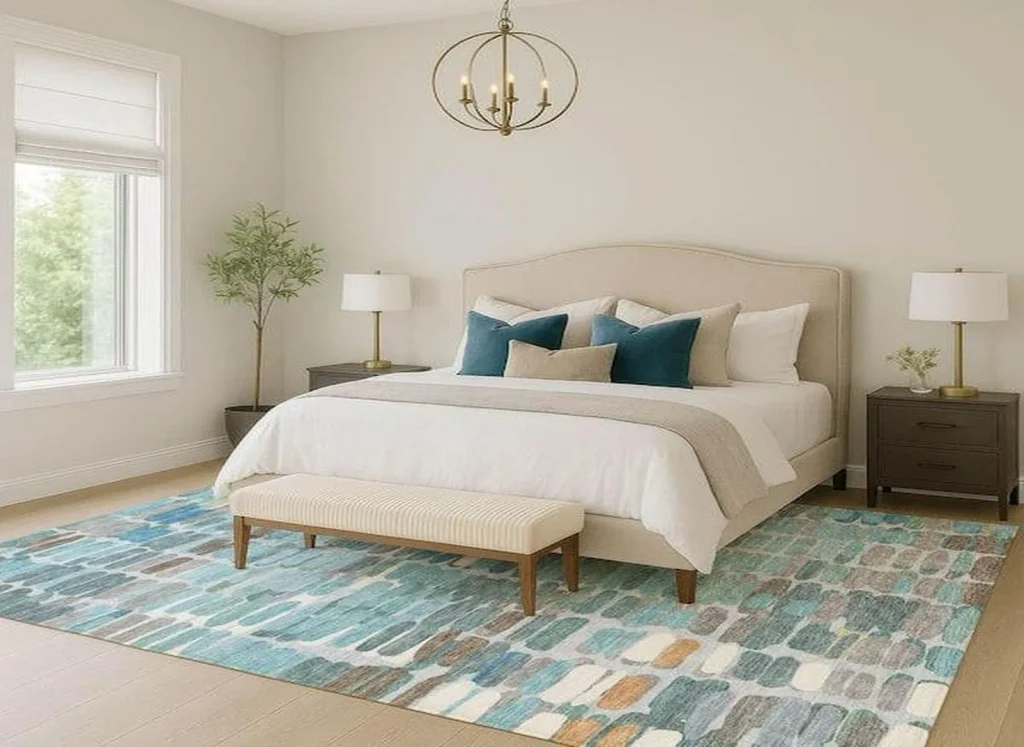
A bold carpet can introduce colour into a bedroom without repainting the walls or changing the furniture.
Colours such as teal, forest green, mustard, terracotta and deep blue can create a strong visual feature, especially in rooms with neutral walls.
For example, a terracotta carpet can complement cream walls and medium-toned wooden furniture. A deep blue carpet can provide contrast against white bedding and light-coloured flooring.
Patterned multicolour carpets can also work, but the surrounding furniture should allow the design enough visual space.
A bedroom already filled with colourful artwork, printed curtains and decorative cushions may benefit from a simpler carpet instead.
Styling tip: Choose one dominant carpet colour and repeat it in a few smaller accessories rather than matching every item exactly.
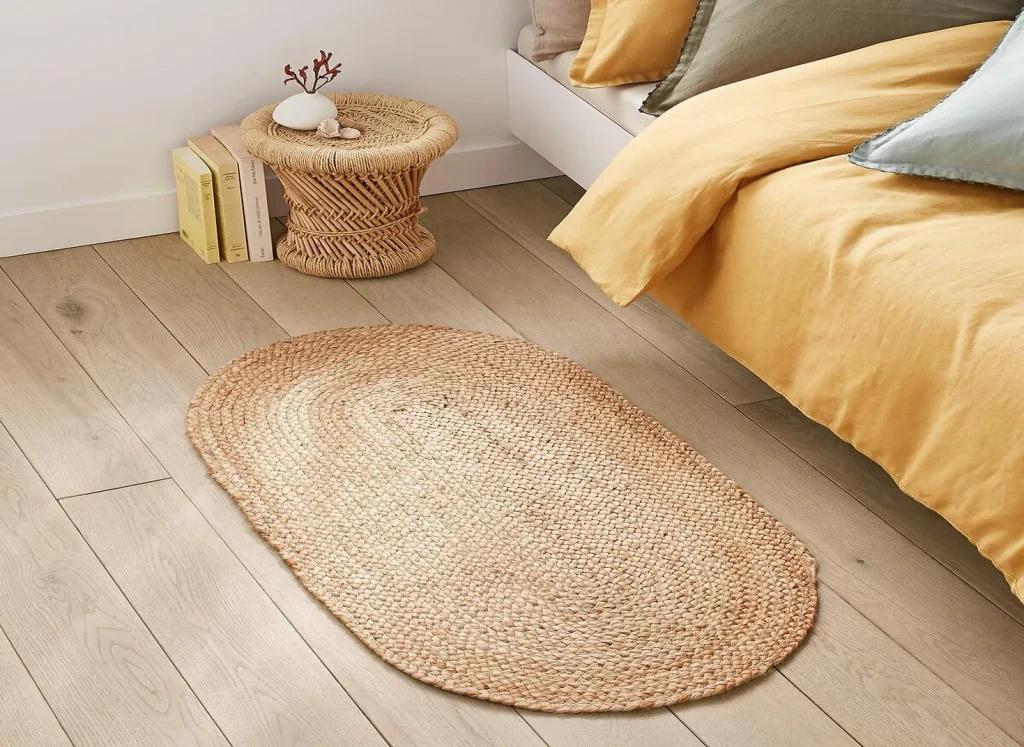
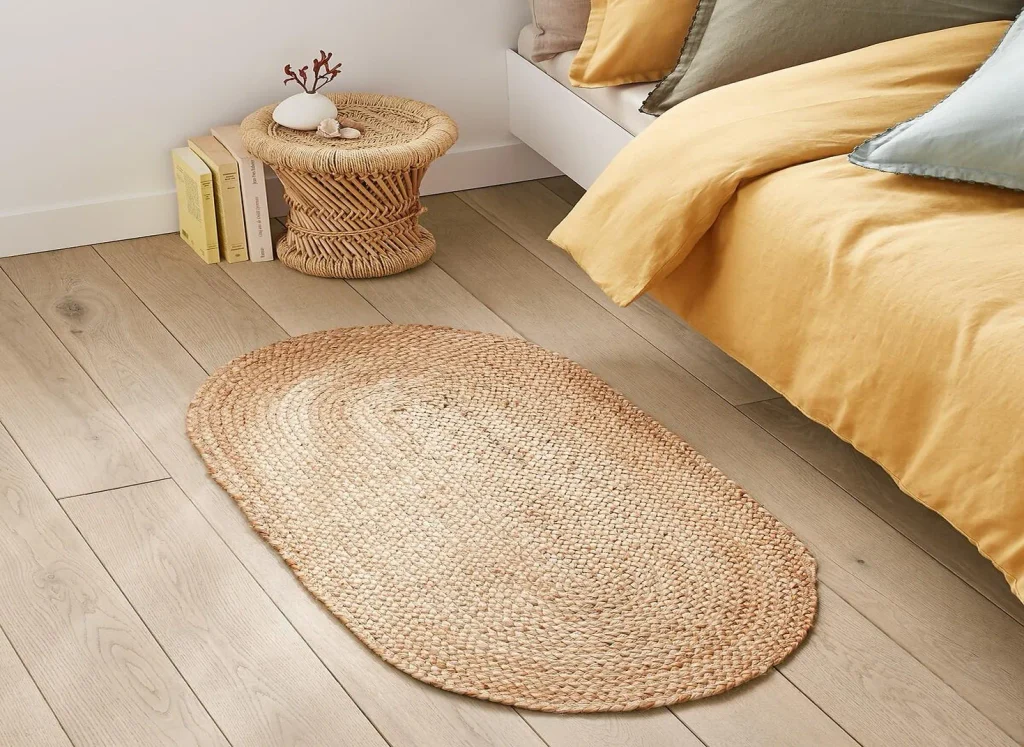
Not every bedroom needs a large rectangular carpet.
A small carpet for bedroom use can be placed beside the bed, below a reading chair or near a dressing table. Round and oval rugs are particularly useful for breaking up rooms dominated by rectangular furniture.
In a compact bedroom, a small rug can add comfort without hiding most of the existing flooring.
However, size still matters. A rug that is too small for the surrounding furniture may look disconnected.
For a bedside arrangement, choose a rug wide enough to provide a comfortable landing area for your feet.
Styling tip: Place a round carpet partly beneath a bedroom chair or beside the bed to visually connect it with the nearby furniture.
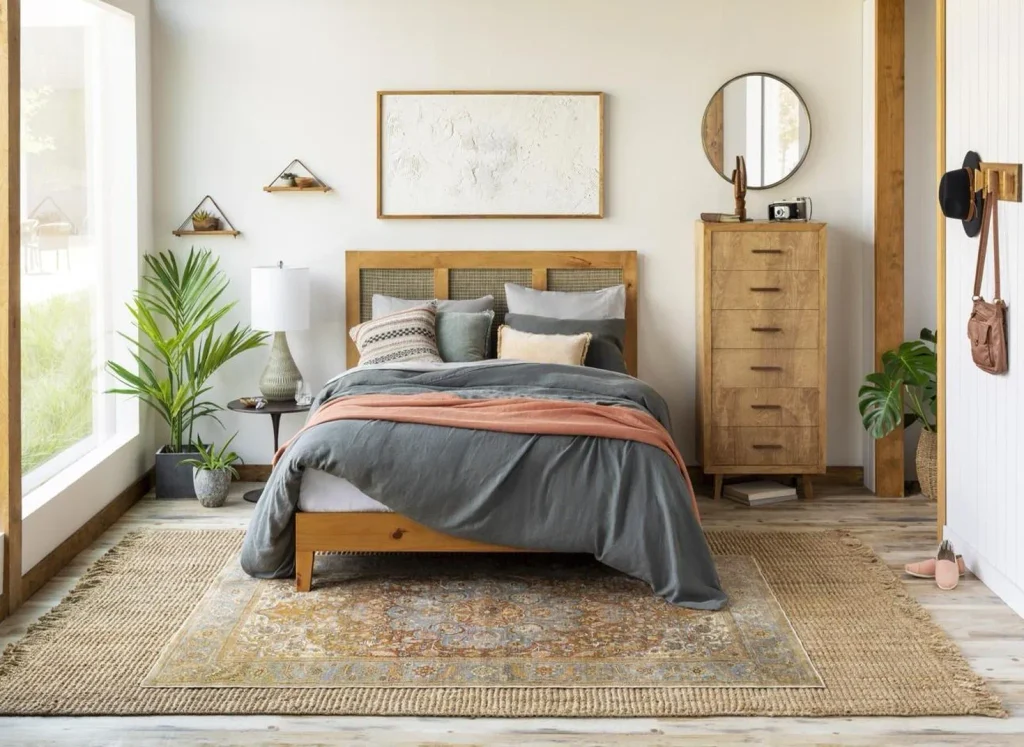
Layering involves placing one rug over another to combine different colours, patterns or textures.
One approach is to use a larger neutral flatwoven rug as the base and place a smaller patterned rug on top. This can introduce decorative detail while maintaining a consistent overall colour scheme.
Layered designs are well suited to bohemian, eclectic and relaxed bedroom interiors.
For example, a beige woven rug underneath a muted Persian-inspired design can create contrast without introducing too many competing colours.
The practical concern is movement. Rugs with unsecured corners or uneven edges can become tripping hazards.
Styling tip: Choose compatible rug pads and secure both layers so they lie flat and do not move underfoot.

Wall-to-wall carpeting covers the bedroom floor as a fitted flooring material rather than a loose rug.
It creates a continuous surface and can make the entire room feel softer underfoot.
Neutral shades such as beige, grey and taupe are often practical choices because they coordinate with different furniture styles.
Wall-to-wall carpeting may suit bedrooms where underfoot comfort is important and the homeowner is comfortable with ongoing maintenance.
Unlike removable rugs, fitted carpets generally require professional installation. Depending on the flooring system, installation may involve underlays, edge fixing and preparation of the existing subfloor.
They are also less convenient to remove for cleaning or redecorating.
Styling tip: Before installing fitted carpeting over existing flooring, assess moisture conditions, door clearance and the manufacturer’s installation requirements.
Carpet colour affects how the floor relates to the walls, furniture and lighting. The same shade can appear different in a bright bedroom and one with limited natural light.
Cream, ivory, beige and taupe are versatile choices for bedrooms with neutral interiors.
These shades complement light wooden furniture, white walls and soft-coloured bedding. They can also create a subtle contrast against darker stone or wooden flooring.
Very light carpets, however, may show marks and dirt more noticeably. If easy maintenance is important, consider a textured neutral carpet rather than a completely plain ivory design.
Grey carpets complement contemporary furniture, metallic accents and simple bedroom layouts.
Light grey can provide a soft foundation for white or pastel bedding, while charcoal grey introduces stronger contrast.
Consider the undertone before selecting a shade. Cool grey may look slightly blue beside warm beige walls, while greige—a mixture of grey and beige—can connect warm and cool elements more comfortably.
Earthy shades include terracotta, rust, olive green, sandy brown and muted ochre.
These colours work well with wooden furniture, natural fabrics and warm white walls.
A muted rust carpet can add colour to a beige bedroom without looking overly bright. Olive green can complement oak-toned furniture and botanical accessories.
Earthy colours are especially useful when you want colour without relying on a strong geometric or floral pattern.
Navy blue, emerald green, burgundy and mustard can be effective choices for bedrooms with relatively simple furniture.
A dark carpet can visually anchor a room, while a brighter carpet can draw attention to the floor.
Before choosing one, consider the room’s natural lighting and the amount of visible flooring. Dark colours across a large area may make an already dim bedroom feel heavier.
The following combinations offer practical starting points.
| Wall colour | Carpet colour | Overall appearance |
| Warm white | Beige or taupe | Soft and coordinated |
| Light grey | Charcoal or greige | Contemporary contrast |
| Sage green | Cream or oatmeal | Natural and relaxed |
| Beige | Rust or terracotta | Warm and earthy |
| Navy blue | Light grey or ivory | Balanced contrast |
| Blush pink | Cream or muted grey | Gentle and understated |
Treat these as design suggestions rather than fixed rules. Always view a carpet sample in your bedroom during daylight and under artificial lighting before making a final decision.
A carpet’s material affects its texture, resilience, cleaning requirements and cost. Construction also matters: two carpets made from the same fibre can perform differently if one is densely woven and the other has a loose, long pile.
Here is a comparison of common carpet and rug materials.
| Material | Advantag | Limitations | Suitable use |
| Wool | Naturally resilient, comfortable and good at retaining its appearance when properly maintained | Often costly; requires appropriate cleaning products and care | Premium fitted carpets and quality area rugs |
| Nylon | Strong, resilient and suitable for repeated foot traffic | Quality and stain resistance vary; some products cost more | Fitted bedroom carpets, especially frequently used areas |
| Polyester | Available in soft textures and many colours; often competitively priced | Some constructions may flatten more readily in heavily used areas | Plush bedroom carpets and decorative rugs |
| Polypropylene | Commonly budget-friendly, moisture-resistant as a fibre and available in many patterns | May be less resilient under repeated pressure; quality varies | Affordable area rugs and selected fitted carpets |
| Cotton | Lightweight, often flexible and used in washable rug designs | Can absorb moisture, shrink or fade depending on construction and care | Flatwoven and removable bedroom rugs |
Nylon, polyester, polypropylene and wool are established fibres for fitted carpets. Cotton is more commonly found in removable flatwoven rugs rather than conventional fitted pile carpeting. Fibre choice should be considered alongside carpet construction and expected use.
The term pile refers to the raised yarn or fibres that form a carpet’s surface. Flatwoven rugs may have little or no raised pile.
Low-pile carpets have relatively short fibres and a flatter surface. They are often easier to vacuum and suit bedrooms where straightforward maintenance is a priority.
Medium-pile carpets provide more cushioning than many low-pile options while remaining practical for regular bedroom use. They offer a useful compromise between softness and maintenance.
High-pile carpets have longer fibres that create a deeper, softer surface. Shag carpets belong to this broad category. They can feel comfortable but may require more careful cleaning.
Pile height alone does not determine quality. Fibre type, density, backing and construction also affect how well a carpet performs.
The best carpet material for bedroom use depends on how the room is used.
For a bedroom with frequent foot traffic, a good-quality nylon or resilient wool carpet may be worth considering.
If softness is your main priority, compare polyester plush carpets with wool and other soft constructions in person.
For a rental property or a bedroom with existing tiles, a removable cotton flatweave or synthetic area rug may be more convenient than fitted carpeting.
If you prefer minimal maintenance, avoid choosing a long-pile carpet purely for its appearance.
It is also worth checking the manufacturer’s care label before buying. Not every carpet can be machine-washed or cleaned using the same products.
Even an attractive carpet can look awkward if its proportions are wrong.
The ideal dimensions depend on your bed size, available floor space and whether you want the carpet to sit beneath furniture or remain separate.
A carpet for a small bedroom should make the floor more comfortable without interfering with movement.
If there is limited space around the bed, a narrow bedside runner may be more practical than a large carpet.
A compact rectangular rug at the foot of the bed can also introduce texture while leaving most of the flooring visible.
Avoid choosing an extremely small rug for a large bed. It may appear visually disconnected from the furniture.
Measure the available floor space, including the clearance needed to open wardrobe doors and walk comfortably.
Queen and king beds require different carpet proportions, but there is no single rug size that works for every bedroom.
Begin by measuring your bed frame, not just the mattress. Some bed frames extend beyond the mattress edges.
Next, decide how much carpet you want visible on either side. As an illustrative starting point, around 45–60 cm of visible rug beyond the sides can provide a comfortable stepping area where the room allows. This is not a mandatory measurement.
For a king bed, a wide rug often looks more balanced than a narrow one. For a queen bed, either full or partial placement can work depending on the bedroom layout.
Before purchasing, mark the proposed rug dimensions on the floor using removable painter’s tape. This makes it easier to judge the proportions and identify clearance problems.
Wall-to-wall carpeting and area rugs can both make a bedroom feel softer, but they differ considerably in installation, flexibility and cleaning.
| Feature | Wall-to-wall carpet | Area rug |
| Coverage | Covers nearly the entire floor | Covers a selected section |
| Installation | Generally requires professional fitting | Usually placed directly with a suitable rug pad |
| Comfort | Continuous softness across the floor | Softness in chosen areas |
| Maintenance | Requires regular vacuuming and periodic deep cleaning | Often easier to lift or remove for cleaning |
| Flexibility | Difficult to change frequently | Easier to replace or reposition |
| Existing tile or marble flooring | Requires checking subfloor and installation suitability | Often convenient with an appropriate anti-slip underlay |
For homeowners who want a permanent, fully carpeted bedroom, fitted carpeting may be suitable.
For renters, people who like changing their décor or households with existing tiled or marble floors, a removable area rug is often the more flexible option.
Neither choice is automatically better. The decision depends on the condition of the existing floor, cleaning preferences and how long you intend to keep the flooring.
A suitable bedroom carpet should look good with your interior, feel comfortable in everyday use and be manageable to maintain.
Start by examining the furniture, wall colours, bedding and flooring.
For a modern bedroom with clean-lined furniture, a neutral or geometric carpet may be appropriate.
Traditional wooden furniture can pair well with floral or Persian-inspired designs. Relaxed, natural interiors may suit woven textures and earthy colours.
Avoid selecting a carpet in isolation. A design that looks attractive in a showroom may not coordinate with the colours already present in your bedroom.
Consider how the carpet will feel when you walk on it barefoot.
A thick plush carpet may offer a softer sensation, while a low-pile carpet may be preferable if easy movement and cleaning are important.
If possible, touch material samples before buying. Photographs cannot reliably show pile density, softness or texture.
Also consider furniture placement. Very soft, thick carpets may develop visible impressions beneath heavy bed legs.
Carpets collect everyday dust and debris, making regular cleaning important.
For general care, vacuum regularly, treat spills promptly using suitable methods, and follow the manufacturer’s instructions. Different rug constructions may require different cleaning techniques.
In bedrooms where dust enters frequently through open windows, a shorter-pile carpet or removable rug may be more manageable than a deep shag carpet.
Check whether the rug can be washed, professionally cleaned or only spot-cleaned before purchasing.
Carpet cost varies according to fibre, construction, size, density and brand.
Do not compare two carpets using material alone. A well-constructed synthetic carpet may be more suitable for your needs than a poorly constructed alternative made from a more expensive fibre.
Climate matters too.
In regions with humid monsoons, pay attention to moisture, ventilation and how thoroughly a carpet can dry after cleaning.
In dry, dusty environments, regular vacuuming may be especially important. Jaipur and other parts of Rajasthan can experience dusty conditions, but individual homes differ in ventilation and exposure.
For bedrooms with existing stone or marble flooring, a removable rug can offer comfort without permanently covering the floor.
Wool, nylon and polyester are good options. Wool offers comfort and durability, while polyester is often more affordable and soft.
Light colours such as beige, cream and pale grey can make a small bedroom feel more open and spacious.
Yes, soft carpets are suitable for daily use. Medium-pile carpets offer a good balance of comfort, durability and easy maintenance
Faux-fur carpets require regular cleaning because their long fibres can collect dust and dirt. They are better suited to low-traffic areas.
Yes, carpets work well in Indian bedrooms. Choose materials based on local weather, dust levels and cleaning requirements
Not necessarily. You can place a large carpet partially beneath the bed or use smaller rugs alongside it, depending on the available space
Choosing a bedroom carpet involves more than finding an attractive pattern. The design should suit the existing furniture, the material should match your comfort and maintenance preferences, and the dimensions should work with the room’s layout.
Whether you prefer a soft plush rug, a traditional patterned design or fitted carpeting, consider how the floor covering will perform in everyday use. A carefully selected carpet can bring texture, comfort and visual balance to your bedroom.