




Newsletter Subscribe
Enter your email address below and subscribe to our newsletter

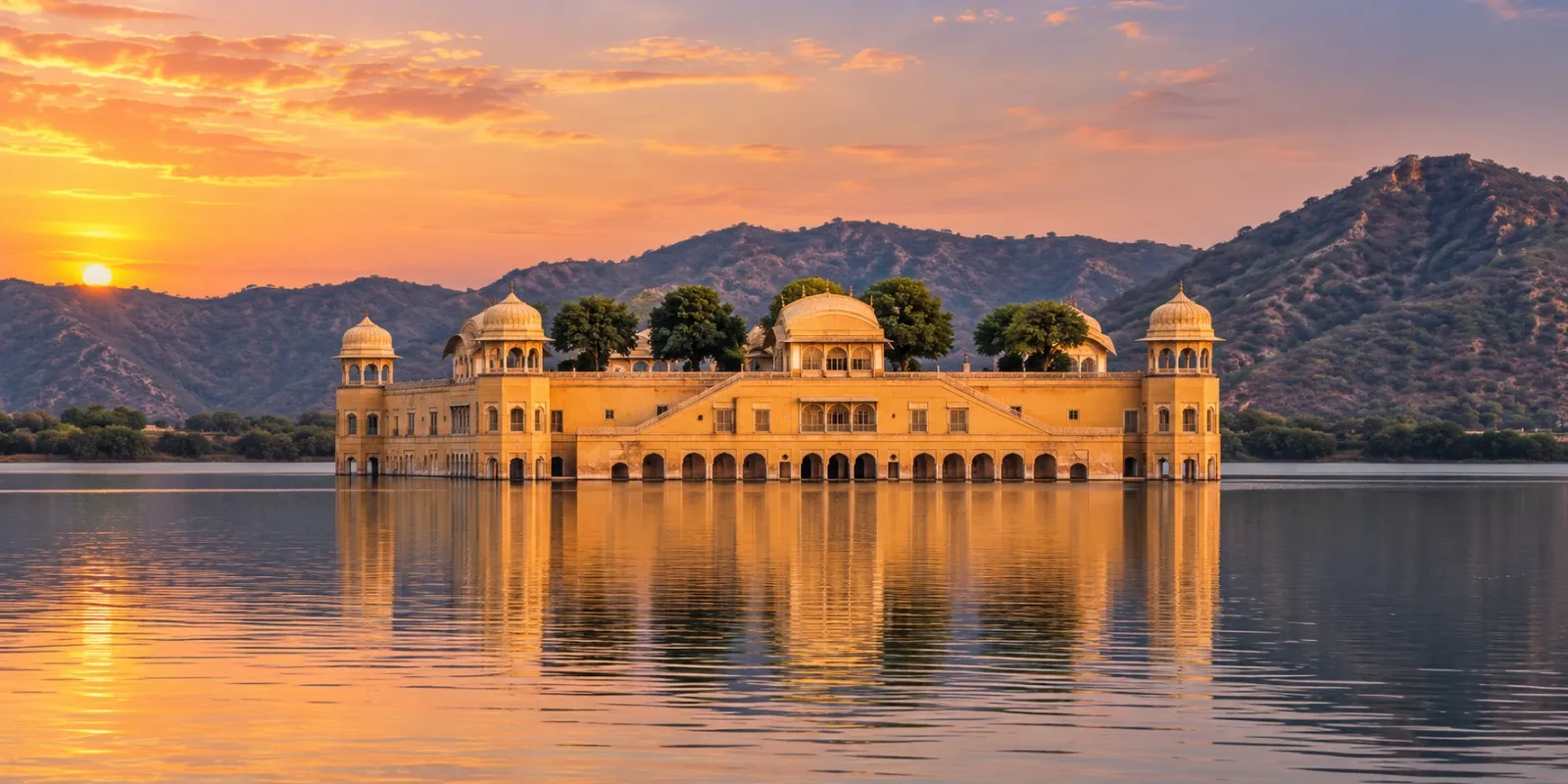
Two days in Jaipur work best when you group nearby sights and leave room for meals, queues and travel. This Jaipur 2 day itinerary puts the Old City on Day 1 and Amber Fort on Day 2, with optional stops instead of an overloaded checklist.
The plan assumes two full sightseeing days: arrive the evening before Day 1 and depart after sightseeing on Day 2 or the following morning. If your train or flight cuts into either day, use the shorter-trip adjustments below.
This is a researched planning guide, not an account of a personally tested trip. Suggested time blocks and spending allowances are estimates; actual conditions depend on your dates, accommodation, traffic and pace.
| Day | Morning | Afternoon | Late afternoon or evening |
| Day 1 | Hawa Mahal exterior and City Palace | Lunch and Jantar Mantar | Johari Bazaar or Bapu Bazaar |
| Day 2 | Amber Fort | Jal Mahal viewpoint, lunch and rest | One optional stop: Albert Hall, Nahargarh or a relaxed evening |
The core route covers Hawa Mahal from outside, City Palace, Jantar Mantar, Amber Fort and a Jal Mahal viewpoint. Hawa Mahal’s interior and the additional Day 2 attraction are optional.
Suggested route: Hawa Mahal exterior → City Palace → lunch → Jantar Mantar → one or both markets.
The timings below are suggested planning blocks, not attraction opening hours. Move Jantar Mantar later in hot weather and shorten shopping accordingly.
| Suggested time | Activity | Planning note |
| 8:30–9:15 AM | Breakfast and Hawa Mahal exterior | Leave time for photographs without blocking the pavement |
| 9:30 AM–noon | City Palace | Allow for ticketing and a comfortable visit |
| Noon–1:15 PM | Lunch and rest | Stay near the Old City sights |
| 1:30–3:00 PM | Jantar Mantar | In hot weather, swap this for a rest and visit later |
| From about 4:00 PM | Markets or a relaxed break | Shopping is optional; finish when you have had enough |
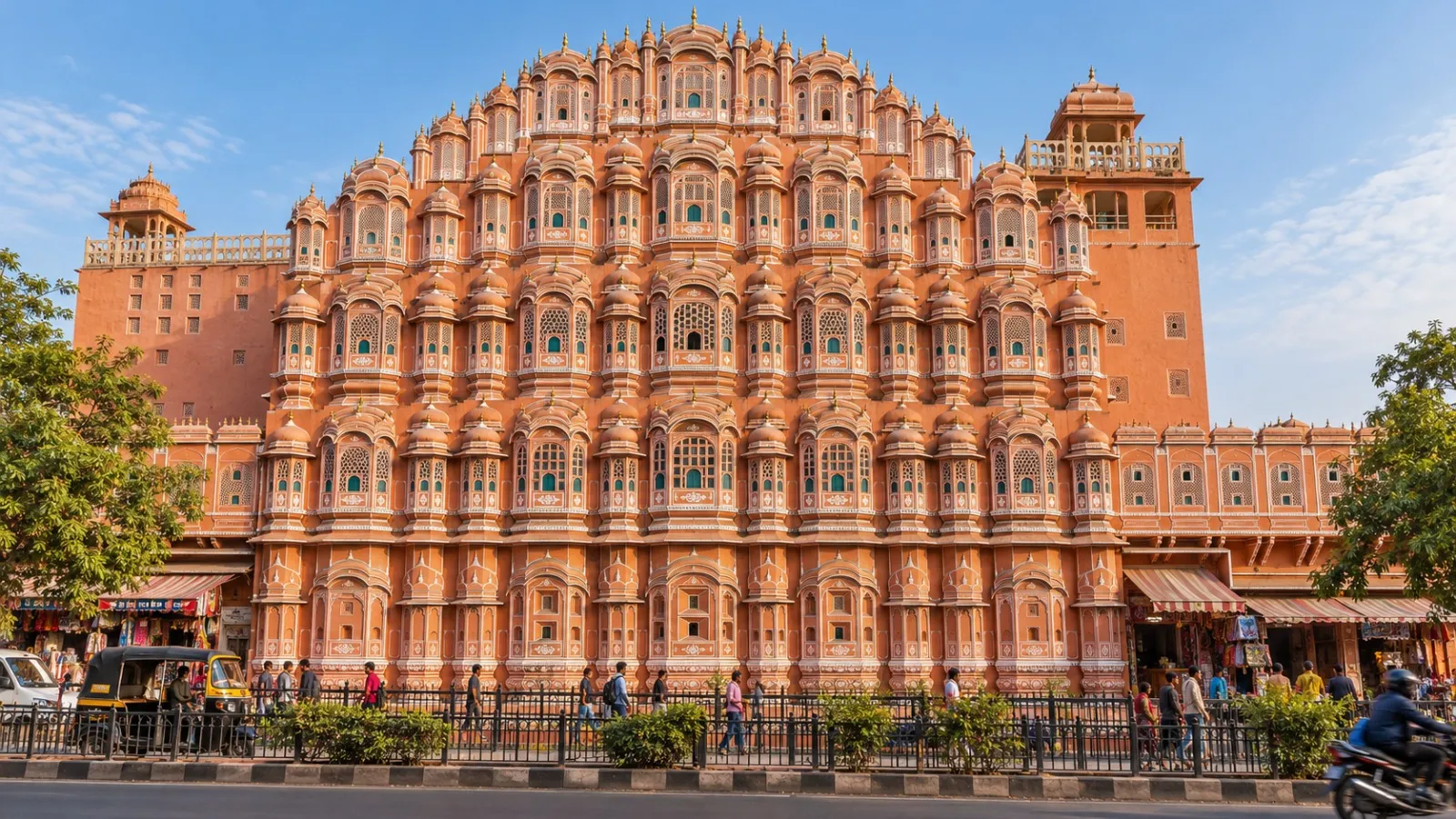
Begin with the street-facing façade of Hawa Mahal. Viewing the exterior and entering the building are different activities: seeing the front does not require buying an interior ticket.
Take photographs from a safe position and avoid stepping into traffic for a clear frame. If you use an elevated café viewpoint, check the menu and any minimum-spend requirement before ordering.
For a relaxed itinerary, keep the interior optional. If you enter, allow another 45–60 minutes as a planning estimate and shift City Palace later. Check that day’s opening and last-entry times before committing.
Allow about two to two and a half hours for the museum visit, including ticketing and breaks. Choose the ticket according to what you want to see; a standard museum visit and a Royal Tour are different purchases.
The official City Palace visitor page lists museum hours of 9:30 AM–6:30 PM, with last tickets at 6:00 PM, and closure on Dhulandi. Its displayed Indian National/Resident museum rate is ₹400 for an adult, covering courtyards and galleries. Confirm your ticket category when booking.
The same page currently notes restoration closure of the Textile Gallery and temporary suspension of Museum at Night. Wheelchair access is listed at major entrances, with accessible restrooms and golf carts available for hire. Ask staff which parts of your chosen route are accessible; entrance access does not guarantee access to every historic section.
Choose lunch near the Old City cluster rather than crossing town for a restaurant. Allow roughly an hour for eating and rest, longer if the weather is hot.
You can try dishes such as dal baati churma, kachori or a Rajasthani thali, but choose according to your appetite and dietary requirements. Ask about ingredients and spice levels rather than assuming every dish suits everyone.
Carry water and plan toilet breaks during restaurant or attraction visits. The itinerary becomes much less enjoyable if every break is postponed to fit another stop.
Allow roughly 60–90 minutes. A guide or reliable interpretation helps explain what the astronomical instruments measure, making this more useful than a quick walk around unfamiliar structures.
Rajasthan Tourism’s Jantar Mantar page lists visiting hours as 9:00 AM–7:00 PM, with last tickets at 6:30 PM. Confirm current arrangements before travel: the page’s ticket prices conflict with the reported 2026 revision discussed below.
In hot weather, take a longer indoor break after lunch and return later in the afternoon. Avoid leaving arrival so late that you lose time for a proper visit. Agree a guide’s fee, language and duration before starting.
Finish with a market walk if you still have energy. Johari Bazaar is an option for jewellery browsing, while Bapu Bazaar is an option for textiles, footwear and souvenirs. Decide what you want to browse rather than treating both as compulsory stops.
Check individual shops’ opening arrangements for your day; do not rely on a single blanket weekly-closure claim for an entire market.
For purchases, compare prices and ask for an itemised bill. For jewellery, ask what documentation supports claims about the metal or stones. A guide’s recommendation is not proof of quality or value.
Suggested route: hotel → Amber Fort → Jal Mahal viewpoint → lunch and rest → one optional activity.
Keep the morning flexible until you confirm Amber’s current opening time. The schedule below assumes morning access; it is not confirmation of an 8:00 AM opening.
| Suggested time | Activity | Planning note |
| Around 7:30–8:30 AM | Travel to Amber | Adjust departure to confirmed opening and hotel location |
| Morning, about 2½–3 hours | Amber Fort | Include the approach, ticketing, walking and breaks |
| Late morning or early afternoon | Jal Mahal viewpoint | Allow around 20–30 minutes, plus travel |
| Around 1:00–2:30 PM | Lunch and rest | Choose the location around your next activity |
| Afternoon | One optional stop | Check hours and arrange return transport |
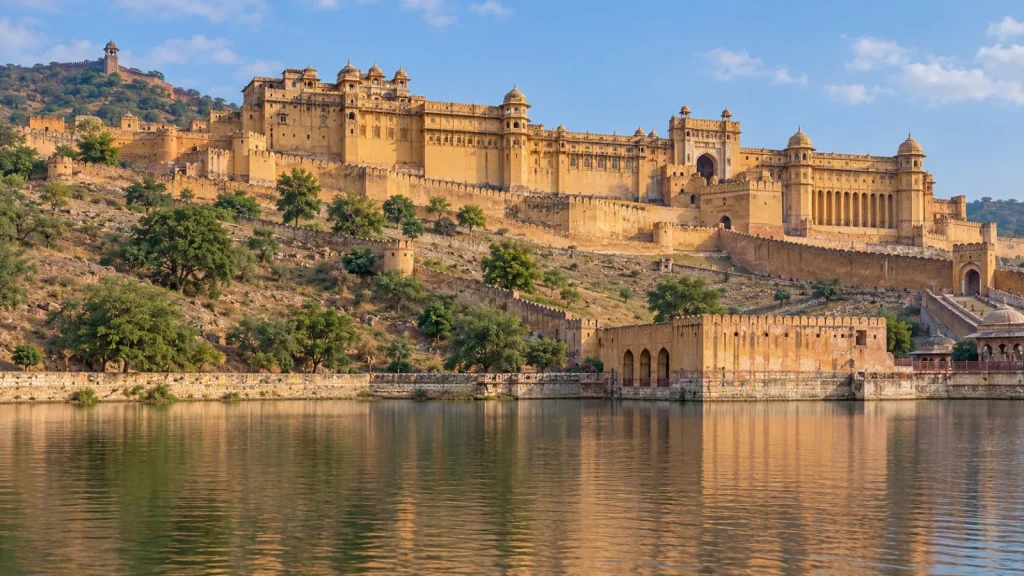
Amber is the main activity of Day 2. Plan for courtyards, gateways and palace interiors rather than attempting to see every corner at speed. Use the Rajasthan Tourism Amber Palace page for background and confirm current admission arrangements through the booking portal or attraction.
Allow approximately two and a half to three hours for the overall visit. This is a planning estimate, not a measured average. Add more time if you enjoy architecture, take frequent breaks or encounter queues.
Comfortable footwear matters. The approach and historic interiors can involve slopes, steps and uneven surfaces. Travellers with limited mobility should ask about current vehicle access, drop-off points and step-free sections before visiting. Do not assume an auto or hired car can deliver you to every entrance.
If considering a jeep transfer, confirm the pickup point, whether the price is per person or vehicle, and what the return includes. This itinerary does not require an elephant ride.
Plan Jal Mahal as a lakeside viewing and photography stop, rather than assuming palace admission or a boat excursion is available. Check local access notices on arrival.
Allow about 20–30 minutes if you only want photographs and a short walk. Shorten the stop in uncomfortable heat. Agree where your driver will wait or collect you before leaving the vehicle.
If you choose Albert Hall or a relaxed afternoon, returning towards central Jaipur may be convenient. If you choose Nahargarh, compare the route first so you do not add unnecessary backtracking.
Leave time for a meal and rest. If Amber has taken longer than expected, drop the optional attraction instead of rushing lunch and arriving close to closing time.
| Option | Choose it if… | Plan before leaving |
| Albert Hall Museum | You prefer museum collections and a central-city stop | Current opening, maintenance closures, ticket category and last entry |
| Nahargarh Fort | Views are a priority and you are comfortable with extra road travel | Fort access hours, journey time, weather and return transport |
| Café, shopping or rest | You want a slower finish | A location near your accommodation or departure point |
Do not assume that fort interiors, viewpoints and restaurants share the same opening hours. A promised sunset visit is only practical when your specific destination permits access at that time and you have a confirmed way back.
If you are departing that evening, a central stop or rest is generally easier to fit than an additional hilltop journey. Leave a separate buffer for collecting luggage and reaching the station or airport.
Use walking for the Old City cluster where comfortable, and an auto or cab when distances, heat or fatigue make that preferable. Check navigation to the actual visitor entrance rather than only the landmark pin.
Before boarding an auto, agree the destination and total fare. For a sightseeing arrangement, clarify waiting, parking, extra stops and the return journey. Keep the itinerary under your control if a driver proposes shopping detours.
The official Jaipur Metro station list runs from Mansarovar through Railway Station, Sindhi Camp and Chandpole to Chhoti Chaupar and Badi Chaupar. It does not list stations at Amber, Jal Mahal or Nahargarh.
The metro can help with Day 1 if your accommodation is conveniently connected to a station. Check current fares and first/last services directly. Include the walk or auto ride between your hotel and the station when comparing convenience.
App-based cabs offer trip estimates, while a hired vehicle can simplify waiting and multiple stops. Compare the full cost rather than the advertised starting price.
For a day booking, ask about included hours and kilometres, parking, waiting, extra-distance charges and hill routes. For separate rides, check pickup availability and return arrangements before going to a more remote stop.
Bus travel requires a separate check of the current route, stop and service frequency. Do not build a timed connection around an unverified bus number.
The table below is for Indian adults. Government-monument rates are reported 2026 rates, not independently confirmed live checkout prices. A 5 January 2026 Navbharat Times report gives Amber at ₹200 and Hawa Mahal, Jantar Mantar, Albert Hall and Nahargarh at ₹100 each. Recheck on the Rajasthan monument booking portal before payment.
| Attraction | Adult planning amount | Status |
| City Palace museum | ₹400 | Displayed on official visitor page; confirm category |
| Amber Fort | ₹200 | Reported 2026 rate |
| Jantar Mantar | ₹100 | Reported 2026 rate |
| Hawa Mahal interior | ₹100 | Optional; reported 2026 rate |
| Albert Hall OR Nahargarh | ₹100 | Optional; reported 2026 rate |
Using these figures, core admission totals ₹700. Adding Hawa Mahal’s interior and one optional museum/fort brings it to ₹900. Guides, transfers, parking, special tours and other extras are separate. Foreign visitors should check their own category rather than use this total.
Do not assume the City Palace composite ticket and a government-monument composite are interchangeable. Compare the current inclusions and validity against the places you will actually enter.
There is no honest fixed total without accommodation dates and transport quotes. Use this worked example to understand the calculation—not as a claim about available hotel or cab prices.
Illustrative assumptions: two adults share a room; three nights; each person budgets ₹600 per sightseeing day for food; the pair sets aside ₹2,000 for local transport.
| Expense | Example calculation | Per person |
| Accommodation | Assumed room ₹2,000 × 3 nights ÷ 2 | ₹3,000 |
| Meals and water | Assumed ₹600 × 2 days | ₹1,200 |
| Local transport | Assumed shared allowance ₹2,000 ÷ 2 | ₹1,000 |
| Core admission | Rates above | ₹700 |
| Two optional admissions | Hawa Mahal plus one Day 2 stop | ₹200 |
| Illustrative subtotal | Before additional expenses | ₹6,100 |
Replace every assumed amount with your own bookings and quotes. The example excludes travel to Jaipur, station/airport transfers, arrival/departure-day meals, shopping, guides, premium experiences and contingency. Two nights instead of three would reduce accommodation by ₹1,000 per person at the assumed room rate.
Where to Stay for This Itinerary
| Area to investigate | Why consider it? | What to check |
| Old City or its edge | Convenient for Day 1 sightseeing | Noise, vehicle access, stairs and luggage drop-off |
| MI Road or a central location | Flexible base for food and road transport | Exact hotel position and travel time to sights |
| Bani Park or Civil Lines | Alternative accommodation bases | Actual station distance and transport costs |
These are areas to compare, not a guarantee that every hotel is quiet or convenient. Read recent reviews for cleanliness, noise, access and service. Check the map for the individual property, including its distance from your arrival point.
Choose City Palace and Jantar Mantar, with a quick Hawa Mahal exterior stop if practical. Skip the interior and shorten shopping. Keep Amber for the following morning.
Visit Amber early, keep Jal Mahal brief if time permits and drop the extra attraction. Set your departure buffer before planning sightseeing.
Move exposed sightseeing away from the hottest part of the day, carry water and use indoor breaks. Check the forecast rather than relying only on the season. In rain, allow more travel time and be cautious on stone steps; reconsider optional hill travel if conditions are poor.
Reduce the number of stops and arrange suitable transport. Ask attractions about the specific route you want to follow, toilets, seating and accessible sections. A shorter comfortable visit is preferable to finishing a checklist.
Booking transport without discussing waiting, parking and the return
Adding Jaigarh, Nahargarh, Albert Hall and a distant dinner experience to the same afternoon.
Treating every estimated journey time as fixed.
Buying a composite ticket without checking its inclusions.
Leaving no time for meals, queues or luggage collection.
Assuming market shops, palace galleries and viewpoints all follow one opening schedule.
Two full days are enough for this selection of major sights. They are not enough for every fort, museum, market and excursion. Choose a longer stay if you want a slower pace or additional attractions
You do not need to bring your own car. Use walking and suitable metro connections on Day 1, then autos or cabs for Day 2. A plan without a private car still needs transport arrangements beyond the metro
That is a possible version of the plan if current hours, road travel and your energy allow it. Confirm the route and return transport, and keep other activities optional. Do not add Albert Hall as another compulsory stop
Keep the Old City cluster and Amber as the main activities. Drop Hawa Mahal’s interior, extended shopping and the additional Day 2 attraction first. A quick Jal Mahal stop should also be dropped if it compromises departure travel
Save your bookings, map pins and transport contacts. Recheck attraction notices and ticket categories shortly before your trip. The most useful Jaipur two day itinerary is one you can adjust when a queue, weather change or delayed arrival makes the original schedule impractical.
Research reviewed on 12 October 2026. City Palace visitor information and the official metro station list were consulted directly. Government-monument fees are reported 2026 figures; live checkout prices, all attraction opening hours and local transport prices were not fully verified